For Talivio News' forthcoming troll-economy dossier, VoxSim ran a pre-registered, 11-question synthetic perception survey across 12 political clusters — attitude questions only, no vote intent, every result published. Clearly labeled: this is a simulation, not a poll. Total model spend: €0.049.
Everything below is uncalibrated (no electoral anchor exists for free-form attitude questions) and cluster-internal — patterns across simulated political communities, never national percentages. National totals were deliberately not produced.
Why we ran this
Talivio News has published a special dossier on Turkey's troll economy — The Price of the Trend: Inside Turkey's Troll Economy — assembling platform takedowns, court files and a decade of research on manufactured political visibility. The editorial team asked us a question that no real-world poll has answered: how do Turkey's very different political communities perceive the machinery that dossier documents? Who believes trends are manufactured? Who thinks the trolls belong to the other side? What would documented exposure of a party's troll network cost it among its own supporters?
A news outlet publishing synthetic opinion data inside an article about manufactured opinion is an obvious minefield. So both teams bound themselves to a joint protocol (the newsroom's ADR-363) before a single question was run: attitude and perception questions only — no vote-intent and no vote-recall questions; cluster-internal distributions only, with no national roll-up of any kind; the synthetic-simulation banner printed inside every image, so screenshots carry the label wherever they travel; and the full question list pre-registered before the run (git commit 07f8924) — no question may be withdrawn, and every result returned must be published, whatever it says.
Method, stamped
VoxSim models Turkey's political map as 12 political clusters, each with its own echo chamber: a time-weighted snapshot of the media diet that cluster actually consumes (snapshot v94–95, generated 2026-08-01/02). An 11-question conditional survey — skip logic included — was simulated independently for each cluster; branching mathematics is computed in code, not by the model. The run was executed on 2026-08-04 through the ai.talivio.com gateway ("standard" quality tier; requested model gemini-3.5-flash, tier-routed centrally), cluster taxonomy v2026-07, with every call written to our EU-AI-Act audit log (run #54). A single-cluster smoke test preceded the full run — and caught a real schema bug before it could touch the results, which is exactly what smoke tests are for.
In the spirit of the dossier — which notes that no cost figure for Turkey's influence operations has ever been disclosed — here is ours, in full: the entire study cost €0.049 in model spend. That figure is itself a finding: synthetic perception research at this scale is now effectively free, which is one more reason labeling rules matter.
What the simulation predicts
1. Nobody trusts the trend list — but clusters disagree on how fake it is
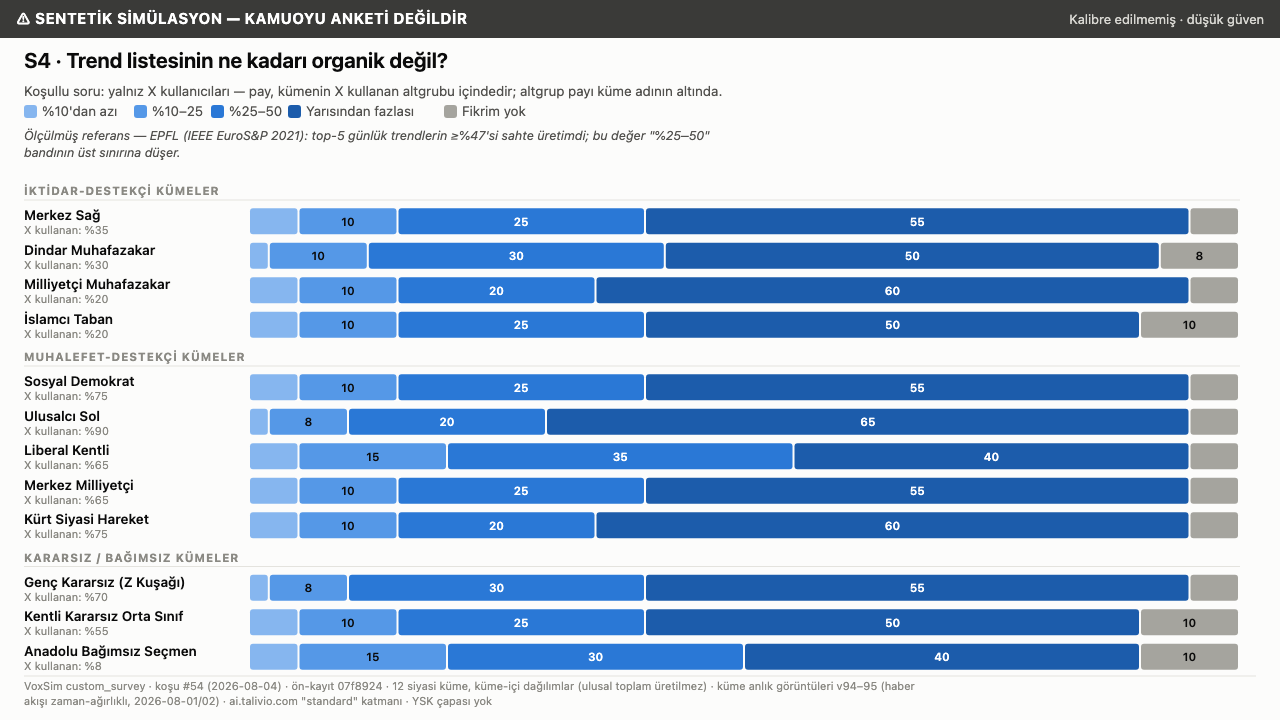
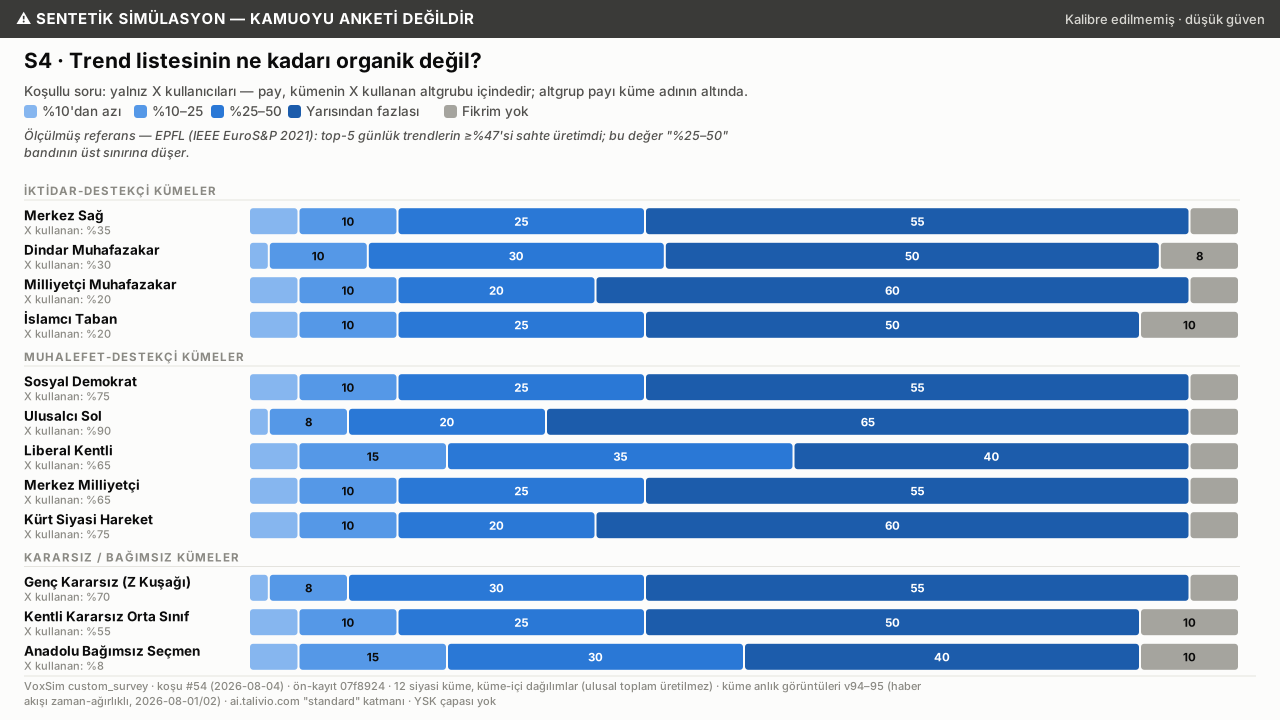
In every one of the 12 clusters, "the X trending list largely reflects Turkey's real agenda" is a minority view (5–10% of simulated X users). Asked what share of the trend list is not organic, most clusters' modal answer is "more than half" — above the measured reality documented in the dossier (EPFL: at least 47% of top-5 trends in the studied period were fake). Simulated perception, in other words, runs ahead of the peer-reviewed measurement, not behind it.
2. The attribution asymmetry is a mirror
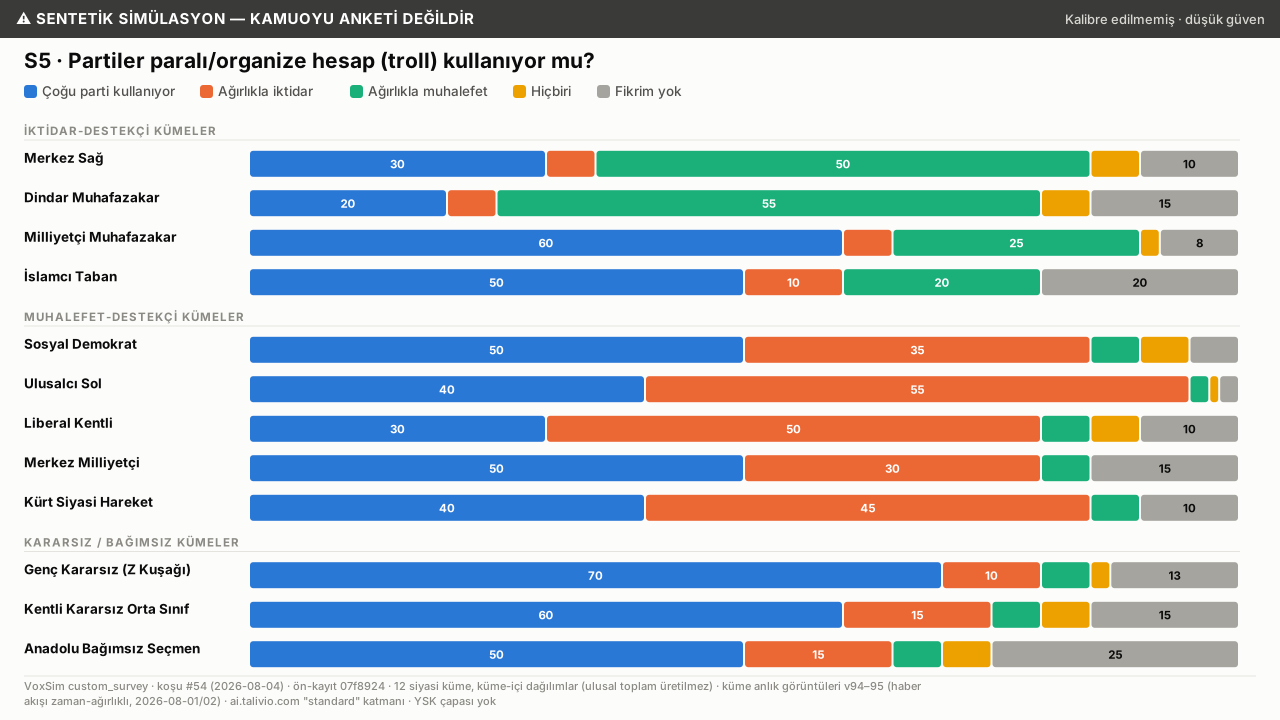
Do parties run paid or organized accounts? Simulated majorities in every cluster say yes — but whose trolls dominate depends entirely on where the cluster sits. Opposition-leaning clusters attribute the activity mostly to the government; government-leaning clusters answer "most parties do it" and point at the opposition far more often than at their own side. The undecided clusters mostly answer "most parties." The dossier documents an asymmetric evidentiary record; the simulation predicts a symmetric perceptual one — each side sees the other's machine.
3. Exposure is cheap where it matters most
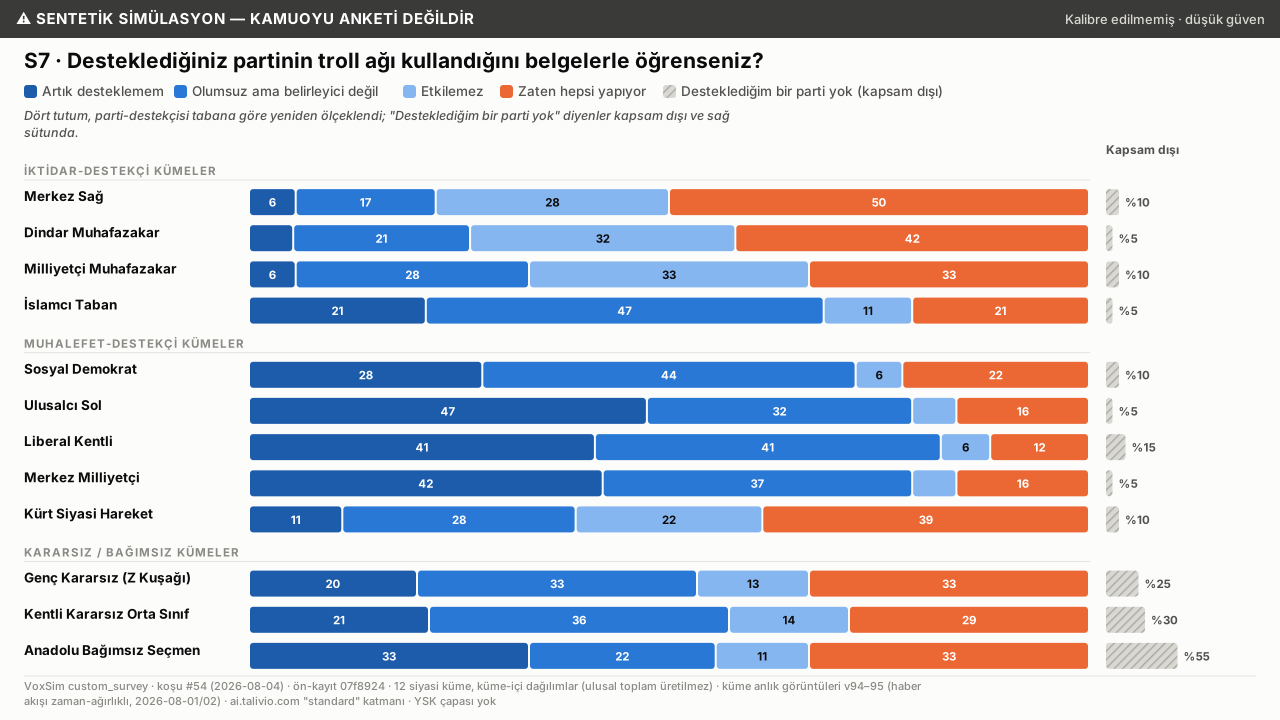
The dossier's central argument is that Turkey's troll economy was never a persuasion budget. Our S7 results add a perception layer: asked how documented proof that their own party runs a troll network would affect them, simulated government-leaning clusters most often answer "they all do it anyway" (33–50% of party supporters) — normalization — while opposition-leaning clusters most often answer "I would stop supporting them" (41–47%). Among the unaffiliated clusters, "I don't support a party" (excluded from the attitude base, shown separately) reaches 25–55%. On these numbers, exposure carries a real price only on one side of the aisle — which, if the pattern holds in reality, helps explain why exposure alone has changed so little.
4. The product is silence — and the simulation finds it
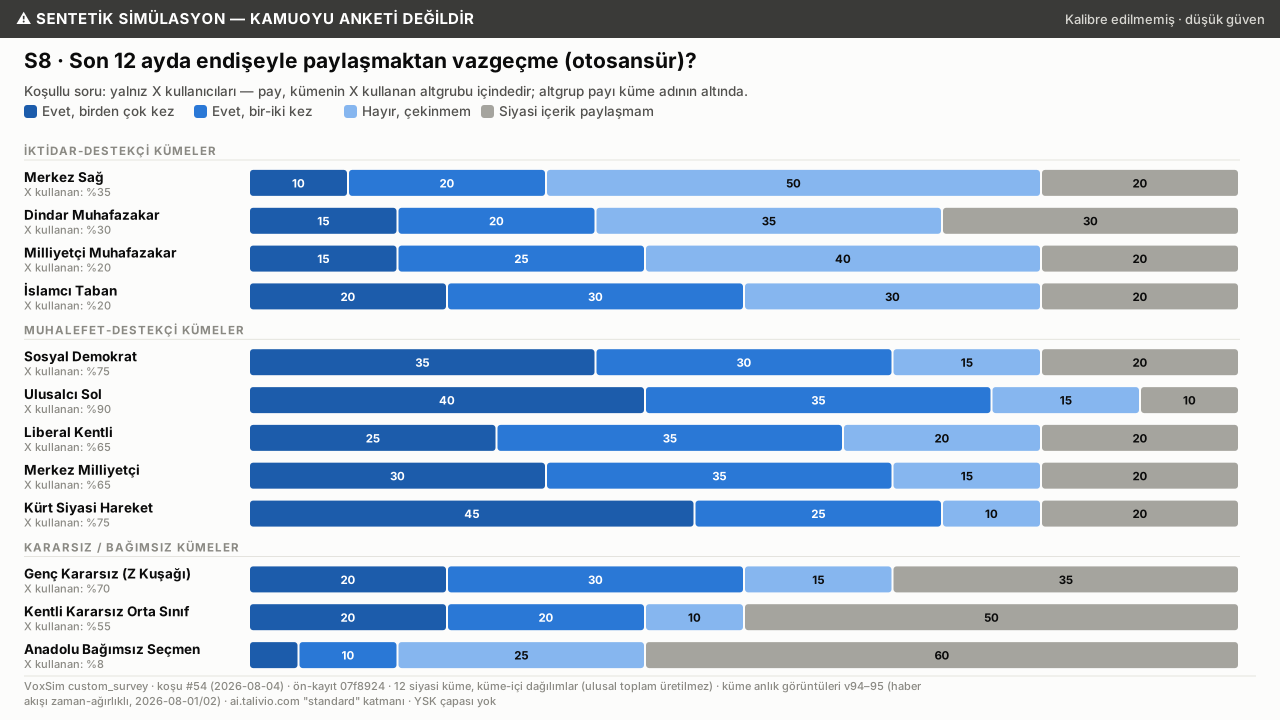
Research cited in the dossier concludes Turkey's operations aim at "silencing the public sphere". S8 asks the perception counterpart: have you, in the past 12 months, decided not to post a political opinion on X out of fear of coordinated pile-ons, being targeted, or legal consequences? In every cluster, simulated self-censorship ("yes, more than once" plus "yes, once or twice") exceeds "no, I post freely" among X users — with the highest abstention-by-design ("I never post politics at all") in the undecided clusters.
5. The disinformation law is read through the same fault line
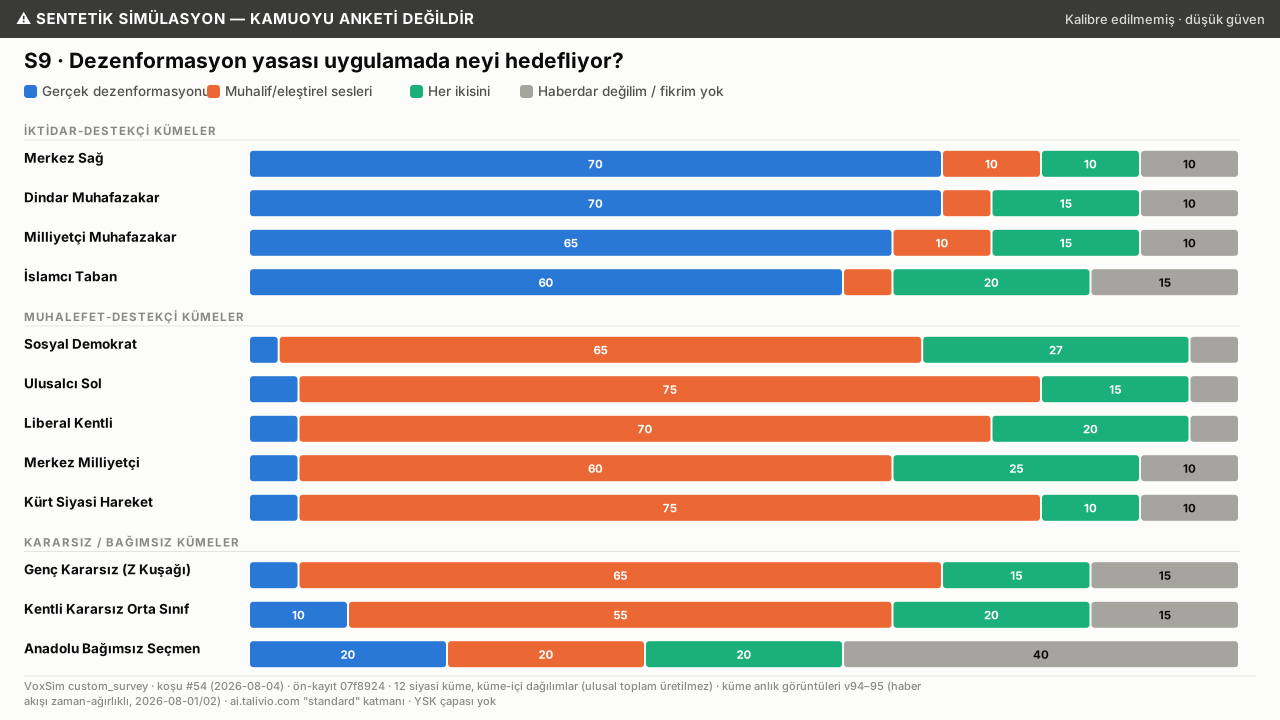
Article 217/A — 4,188 investigations, 12 convictions in two years, per the dossier — splits the simulated map cleanly: opposition-leaning clusters overwhelmingly say the law targets "opposition and critical voices" (65–75%); government-leaning clusters say it targets real disinformation or "both". Perception of the law's purpose tracks political identity almost perfectly — a colder way of saying the law persuades no one across the line.
Limits, printed as prominently as the findings
Three limits matter. First, calibration: none exists. There is no ground truth for these questions; that is precisely why they were worth asking and precisely why no number here is a prediction. Second, the clusters' simulated X-usage shares (8–90%) run well above Turkey's measured national penetration (~21%, DataReportal 2026) — expected, since the taxonomy models politically engaged communities, but it means conditional questions describe X-using subgroups, not national cross-sections. We flag this discordance rather than correct it. Third, a simulation fed by each cluster's media diet may partly return that diet's own assumptions; where our outputs align with measured externals (Reuters Institute DNR 2025's low trust figures and polarized brand-trust map), we note the concordance — it is a consistency check, not a validation.
The full per-cluster distributions (JSON), all 22 labeled charts, the frozen question list and the pre-registration hash are available with this post. Every question returned is published here or in the dossier's simulation section; nothing was withdrawn.
This study was produced under VoxSim's Module K publication rules and the joint ADR-363 protocol with Talivio News. VoxSim is a decision-support simulation, not an oracle; if you quote one number from this page, quote the banner at the top.